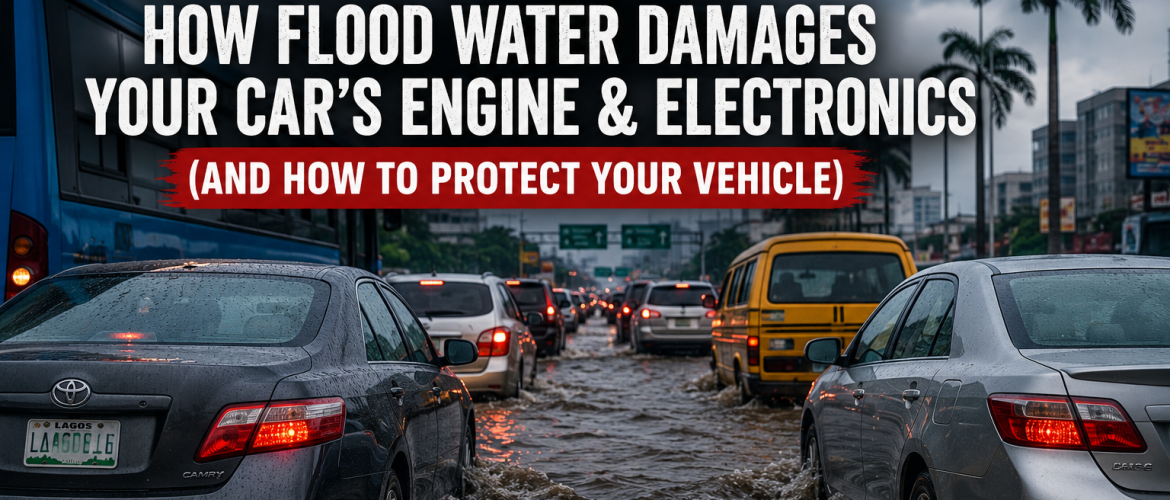
Every rainy season in Lagos comes with one familiar challenge, flooded roads.
From Victoria Island to Lekki, Ajah, Gbagada, Ikeja, and other parts of the city, many motorists find themselves navigating waterlogged streets just to get home or make it to work. While some vehicles make it through seemingly unharmed, others develop expensive mechanical and electrical problems days or even weeks later.
The truth is this:
Flood water is one of the biggest enemies of modern vehicles.
Even if your car appears to be running perfectly after driving through flood water, hidden damage may already be taking place.
Here’s what every Lagos car owner should know.
Why Flood Water Is So Dangerous for Cars
Flood water isn’t just rainwater.
It often contains:
- Mud and sand
- Sewage
- Oil and fuel residue
- Salt
- Chemicals
- Debris and waste
These contaminants speed up corrosion, damage sensitive components, and create electrical faults that may not show up immediately.
How Flood Water Damages Your Car’s Engine
1. Engine Hydrolock
This is one of the most expensive types of flood damage.
Your engine is designed to compress air, not water.
When water enters the engine through the air intake, the pistons attempt to compress it. Because water cannot be compressed, internal engine components such as connecting rods, pistons, and even the engine block can bend or crack.
In many cases, the engine may require a complete rebuild or replacement.
Warning Signs
- Engine suddenly stops while driving through water
- Loud knocking sound
- Car refuses to start afterward
- Rough engine performance
2. Water-Contaminated Engine Oil
If flood water enters the engine, it can mix with engine oil.
This reduces lubrication and causes excessive wear on internal components.
Instead of protecting the engine, contaminated oil becomes harmful.
3. Damaged Air Filter
A soaked air filter restricts airflow into the engine.
This leads to:
- Reduced performance
- Poor fuel economy
- Difficulty accelerating
- Increased engine strain
How Flood Water Damages Vehicle Electronics
Modern vehicles contain dozens of electronic control units (ECUs), sensors, wiring harnesses, cameras, and modules.
These systems are extremely sensitive to moisture.
Flood water can damage:
- Engine Control Module (ECU)
- Transmission control module
- ABS system
- Airbag sensors
- Parking sensors
- Reverse cameras
- Power windows
- Electric seats
- Infotainment system
- Keyless entry system
Sometimes the problems don’t appear immediately.
A vehicle may work perfectly today but begin showing warning lights weeks later because corrosion has started inside electrical connectors.
Hidden Flood Damage Most Drivers Don’t Notice
Many motorists assume that because the car still starts, everything is fine.
Unfortunately, that’s not always true.
Flood water can slowly damage:
- Wheel bearings
- Suspension components
- Brake systems
- Differential oil
- Transmission fluid
- Electrical connectors
- Rubber seals
These problems may take weeks or months before they become noticeable.
Should You Drive Through Flood Water?
The safest answer is simple:
Avoid it whenever possible.
If you cannot see the road beneath the water, you cannot tell:
- How deep it is
- Whether there’s a pothole
- Whether the road has collapsed
- Whether the current is strong enough to move your vehicle
Even SUVs with higher ground clearance can suffer severe damage if the water reaches the engine’s air intake.
If You Must Drive Through Flood Water
Sometimes there is simply no alternative.
If you must continue, follow these tips:
Drive Slowly
Create a gentle bow wave instead of splashing through the water.
Fast driving forces water deeper into the engine bay.
Stay in One Gear
Maintain a steady speed.
Avoid sudden acceleration.
Avoid changing gears in manual vehicles while crossing.
Keep Distance
Allow enough space between vehicles.
If the car ahead stalls, you’ll have room to stop safely.
Avoid Stopping
Stopping in deep water increases the chance of water entering the exhaust or engine.
Maintain slow, steady movement.
What To Do If Your Engine Stalls in Flood Water
This is critical.
Do NOT attempt to restart the engine.
Trying to restart a flooded engine can turn a repairable situation into complete engine failure.
Instead:
- Switch off the ignition.
- Exit the vehicle safely if necessary.
- Arrange for the vehicle to be towed.
- Have it inspected by qualified technicians before attempting to start it again.
What To Do After Driving Through Flood Water
Even if your car seems fine:
Wash the Undercarriage
Mud, salt, and contaminants trapped underneath accelerate rust.
A proper underbody wash helps prevent corrosion.
Check the Brakes
Lightly apply the brakes while driving to help dry the brake discs.
If braking feels unusual, have the system inspected.
Inspect Fluids
Check:
- Engine oil
- Transmission fluid
- Differential oil
- Brake fluid
Milky or cloudy fluid may indicate water contamination.
Watch for Warning Lights
Don’t ignore dashboard warning lights after driving through flooded roads.
Early diagnosis can prevent much larger repair bills.
How RYNO Auto Helps Keep Your Vehicle Protected
At RYNO Auto, we understand the challenges Lagos motorists face during the rainy season.
Our experienced technicians can inspect your vehicle for hidden flood damage before small issues become major repairs.
Whether you’ve recently driven through flood water or simply want peace of mind, a professional inspection can help keep your vehicle safe, reliable, and ready for Nigeria’s roads.
Lagos flooding may be unavoidable during the rainy season, but costly vehicle damage doesn’t have to be.
Knowing when to avoid flooded roads, understanding how flood water affects your engine and electronics, and acting quickly after exposure can save you hundreds of thousands, or even millions, of naira in repairs.
If you’ve recently driven through flood water, don’t wait for warning lights to appear.
A timely inspection today could prevent a major breakdown tomorrow.